Showing posts with label bees. Show all posts

Sunday, November 1, 2015

Think Tank is BUZZING!


Over the past 6 weeks, Think Tank has been a BUZZ with all things bees. From our partnership with DC Beekeepers to our Wisconsin Fast Plants unit, Think Tank learning about the partnership between honeybees and plants is in full bloom! Take a closer look at what our 3rd and 2nd graders have been up to!                   

For the second year in a row, 3rd grade partnered with master beekeeper Toni Burnham and volunteer Barry Hayman of DC Beekeepers to complete an intensive, 10 week honeybee unit. Each class is an in-depth look at a very specific part of honeybee survival. This year, we focused strongly on structural and behavioral adaptations as this is an important 3rd grade NGSS concept. Honeybees truly are our insect partners!   Take a look!


Class #1: Why are pollinators important, and why do we work with only one kind, the honeybee?
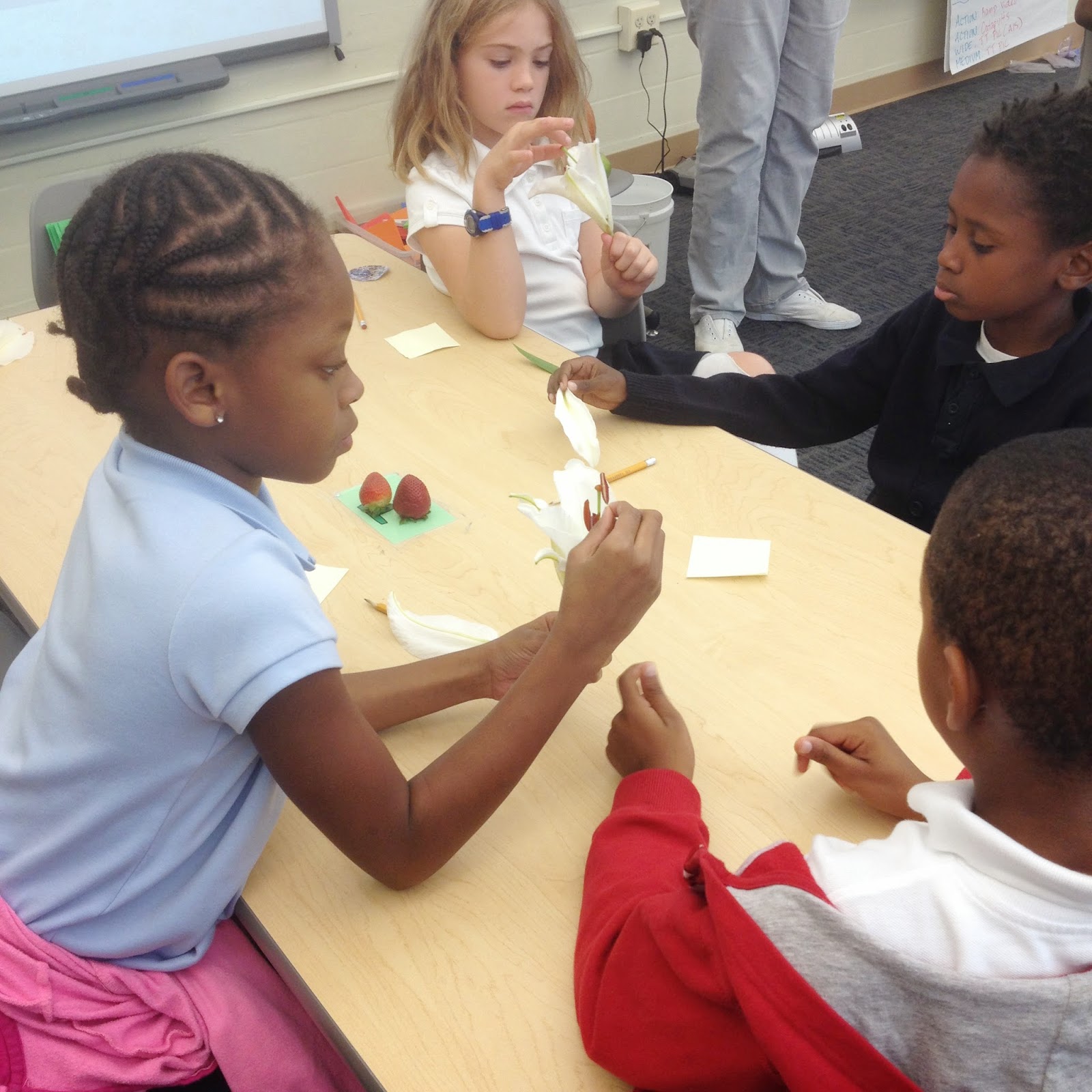
Students dissected lilies and diagrammed the reproductive parts of the flower. They explored how these parts worked in conjunction with the honeybee in the process of pollination.
 
Class #2: Who lives in a beehive?
Students looked at the family and physical structure of honeybees. They used an observation hive of life, working bees as well as dried honeybees to look closely at bee behavioral and structural adaptations.


Class 3: What is a beehive and what do beekeepers do?
On this day, Toni brought in a modern hive. Students took it a part and explored the way it was constructed. They compared it to the hives found in nature and looked at the reasons behind various structures. She also shared the clothes beekeepers wear to protect themselves. Always remember to put those socks over the bottom of your pants!


Class 4: Bees or Wasps or Hornets?
In this class, students explored the ways that these insects are different from one another. They looked at the structural and behavioral adaptations that each needed for survival and reinforced that the honeybee has no desire to sting us! (Did you know that if a honeybee stings it will die?)
Class 5: Are Bees in Trouble? (Hint: YES!)
Students looked at the biggest issues harming our honeybee population. Students also used math to tell the story of the bee population troubles.Take a look what these numbers show.... it's frightening!


They then learned what was contributing to the colony issues. Construction, monoculture, mass-pesticide use and disease are all killing honeybees faster than beekeepers can keep up with. They took their ideas and made posters to show how they think we can save the bees!


Class 6: What are the products of the hive and why do bees make them?
After learning about why the bees make certain things we love (honey) and use ( beeswax), students tasted raw pollen and made their own beeswax candles. 

What comes next??
When spring arrives, students will wrap up this partnership with 4 week unit putting their learning into action! Lessons include building a hive, making native pollinator nests, seed balls and harvesting their own honey!

For more information or access to this amazing curriculum, please contact Toni Burnham at dcbees@dcbeekeepers.org . She is an amazing resource and has this entire unit ready for any teacher to use!

For 2nd grade,  rockin' classroom teachers Ms. Hipps and Ms. Fox completed completed the awesome Engineering is Elementary unit "Designing Hand Pollinators" as part of their Quarter 1 cornerstone. Students explored the issue of lack of native pollinators in various places around the world and then designed hand pollinators that worked with a variety of different plants. You can check out some pictures from their study on the class Twitter feed @maury2ndgrade !


To build on that knowledge, student then came to Think Tank where they planted, grew and tended to Wisconsin Fast Plants. As part of this process, they pollinated the plants with real, dried bees and saw the real-life outcome of pollination. While we are now in the waiting phase for our pods to dry and collect our seeds, take a look at the process we went through to get there!
Students followed a specific procedure for planting.

Each week they observed and measured and recorded data about their plants.

Plants must be kept under grow lights 24h a day.
 When the flowers bloomed, it was time to pollinate!


Students used real bees ( dried and glued to sticks) to pollinate their flowers. They identified the flower structures and make observations about the transfer of pollen too!

                              
A week later our pods are fully forming! Petals fell off ( they are not needed to attract pollinators anymore) and students can see the seeds inside. Did you know that every seed was once one grain of pollen?


Students are now just waiting for their pods to dry out so they can collect the seeds. Next year's 2nd graders will then have seeds to do the same project! So cool!

Even though this blog post is all about these two grade levels, rest assured that exciting Think Tank units are happening in all others! All grade levels begin new units this week! 

Make sure to follow our thinking on Twitter @maurythinktank and I'll be back with a blog post about our Project Lead the Way units in the coming weeks!


Saturday, September 20, 2014

A STEM-TASTIC START!

1st graders ready to start planting seeds!
The Think Tank has had a STEM-TASTIC start to the 2014-2015 school year. With so many exciting projects and partnerships are underway I knew I better start sharing our thinking and learning!

Below you'll find pictures and videos from what is happening school-wide and at each grade level in Think Tank. It's a lot.... but it's exciting!!!

MAURY MONARCH MADNESS!

Now in our 4th year, Maury Monarch Madness is in full effect. All classes preschool through 5th are engaging in a variety of lessons surrounding their observation of the Monarch butterfly's amazing life cycle. While our preschool students make observations, our older students graph growth or eating patterns over-time and compare life cycles to other studies. Each year this project unifies our school with a common project and common scientific study. It's a favorite and grows in depth each year! Take a look at our past years' Monarch Madness posts to see what has happened before!


                                   A PEEK AT SOME GRADE LEVEL WORK

PreSchool and PreK

For our youngest Maury students, Think Tank is a time to explore the world around them. They learn about science through play and working together and are able to choose Sci-Centers each time they visit. While we always start in a circle with a song ( it is currently a Monarch life cycle song), they soon bring their picture to various centers to explore various concepts.


 In the coming weeks they will vote on what they want to learn about next! I will use their votes to create new centers that allow them to explore the concept through play. (For an example, see last year's blog post from when we studied Space.) Stay tuned!


Kindergarten

"Contribute Positively to the Group" and " Look Carefully" are at the center of our current center-based Think Tank class. Students have choice of centers where they must work together to build, observe, create or problem solve and then reflect on what they are doing. Kinder Sci-Centers allow students to practice specific scientific skills and notice the may ways science is in our every day lives. In this clip, you will see kids using gears, creating structures, playing with balance, coloring butterflies, using magnifying glasses and more. The goal is to let them see that science and engineering is everywhere!!


As I introduce new concepts or materials, we often sing about them ( ask your Kinder about our weather song!) and place them at centers. Last week we had Monarch larvae for students to observe closely. Not surprisingly, they were very excited by the amount of frass (poop) that caterpillars create!


1st Grade
With the Next Generation Science Standards guiding our work both in content and practice, our 1st graders are growing Wisconsin Fast Plants to answer the question, " How are young plants alike and different from adult plants?" They examined seeds, planted them and are recording with measurements and observations over the course of 6 weeks the growth of the plants. We are heading into week 2 so stay tuned to Twitter (@maurythinktank) for snapshots of our work moving forward.


 2nd Grade
 Second grade began the year learning about what a scientist is and what they do. We focused on seeing ourselves as scientists and then practiced making observations, and separating those from inferences.
Future STEM leaders see themselves as scientists!
Students learn to ask each other "Sci-Chat" questions to help them discuss observations they make about new objects.

2nd grade also began our partnership with The Anacostia Watershed Society (AWS), exploring seeds and grasslands and their role in our local environment. Experts from AWS visited with our
students and lead students through an in-depth lesson on seeds and seed dispersal. It was a hit!


                  Exploring Swamp Milkweed and Indian Grass seeds with Chris Lemieux from AWS

3rd Grade
This year the 3rd grade teachers and I have thoroughly planned to create a very in-depth study comparing various patterns in nature-- from weather to life cycles. Based on the 3rd Grade NGSS standards this 3 month unit combines observation, recording data, partnerships and engineering design into one mega-awesome learning experience!

Wild and Wonderful Weather Wall is used for students to graph temperature data over the course of the next three months to determine patterns in temperatures over a season. January through April, they will add precipitation data collection too!


Following scientific procedures, 3rd grade also planted Wisconsin Fast Plants in order to analyze plant life cycles and take on the following challenge: "How many seeds can you get from one single seed"?  Over the next 45 days students will thin plants, record observations, make measurements, pollinate plants and collect seeds. 


       Seeds labeled and ready: DAY 1                                  Fast Plants Growing Station

Not only are students looking at weather patterns, life-cycles Monarch butterflies and plants, they are also lucky to have started two 6-week units with Toni Burnham, leader of DC Beekeepers


From plant anatomy to the role of bees in our lives, students are exploring these awesome pollinators and applying their learning directly to the plants growing in our classroom! (Can you tell I'm excited about this unit??)             


               Learning about plant anatomy and the "how" behind pollination and fruit production as it relates to bees !


Pulling apart Lilies and exploring the texture, smell and look of the insides!
                     
 4th Grade
One of the things that make Think Tank truly unique is the flexibility I have to allow students of all ages an opportunity to truly be creative, use all of their "smarts" and strengthen their Habits of Mind and build community around problem solving. Starting in October, 4th grade will begin a 3 month unit surrounding Energy ( thank you donors from Donor's Choose!!) but in order to prepare to use the extensive materials and to work together in teams on engineering projects in this unit, I wanted students to have 4 sessions to practice important non-cognitive skills.


Students have been using Legos  create story boards to animate with Stop Motion on iPad, making extensive ramps and structures with Keva blocks or using 100 gears that move with one single turning point.


Most importantly, they've had to do this working in groups with a singular goal... not always an easy task.
                                        

As you see, the outcome is not always the goal! In fact, final product was never the focus for these weeks, it was alllll about the process! Perseverance, communication and contributing positively to a group and inspiring teamwork have been central this past month. Take a look at some of their work and stay tuned through December to see their Energy unit in action!

5th Grade

Thank you "We the Pizza" for donating dinner for our 1st Space Camp meeting!
                                         
As you may have read in my last post , 5th grade is working to attend SPACE CAMP!!!

Families learning about our goal to go to Space Camp! Want to support us? Please go HERE!
On top of our fundraising goals and planning, students must begin the most enriching work....learning! This week I will attend a training for the SeaPerch Robotics program and our students will begin construction of their vehicles in October.

SeaPerch in action!
I will be partnering with three other schools ( Mann Elementary, Hyde-Addison Elementary and West Education Campus) to complete this engineering unit. Our focus will not be on competition but on collaboration and process. We are thrilled to join this program and know it will inspire and challenge our eldest students!


STAY TUNED....

As you can see the 1st month of school has been filled with thinking and doing, exploring and creating... and lots of love for STEM! Please follow us on Twitter for more frequent updates
(Twitter handle @maurythinktank) and never hesitate to email me at vanessa.ford@dc.gov .

Until next time.... happy thinking and learning!
-Vanessa Ford